
Veranda Tales-Summer of vegetable farming
The summer between my 6th and 7th grades, we moved from a smaller quarters to a larger house on the campus. We had a larger front yard and backyard extending all the way to the Howrah–Chennai main line train tracks. There was a handpump in the front yard.
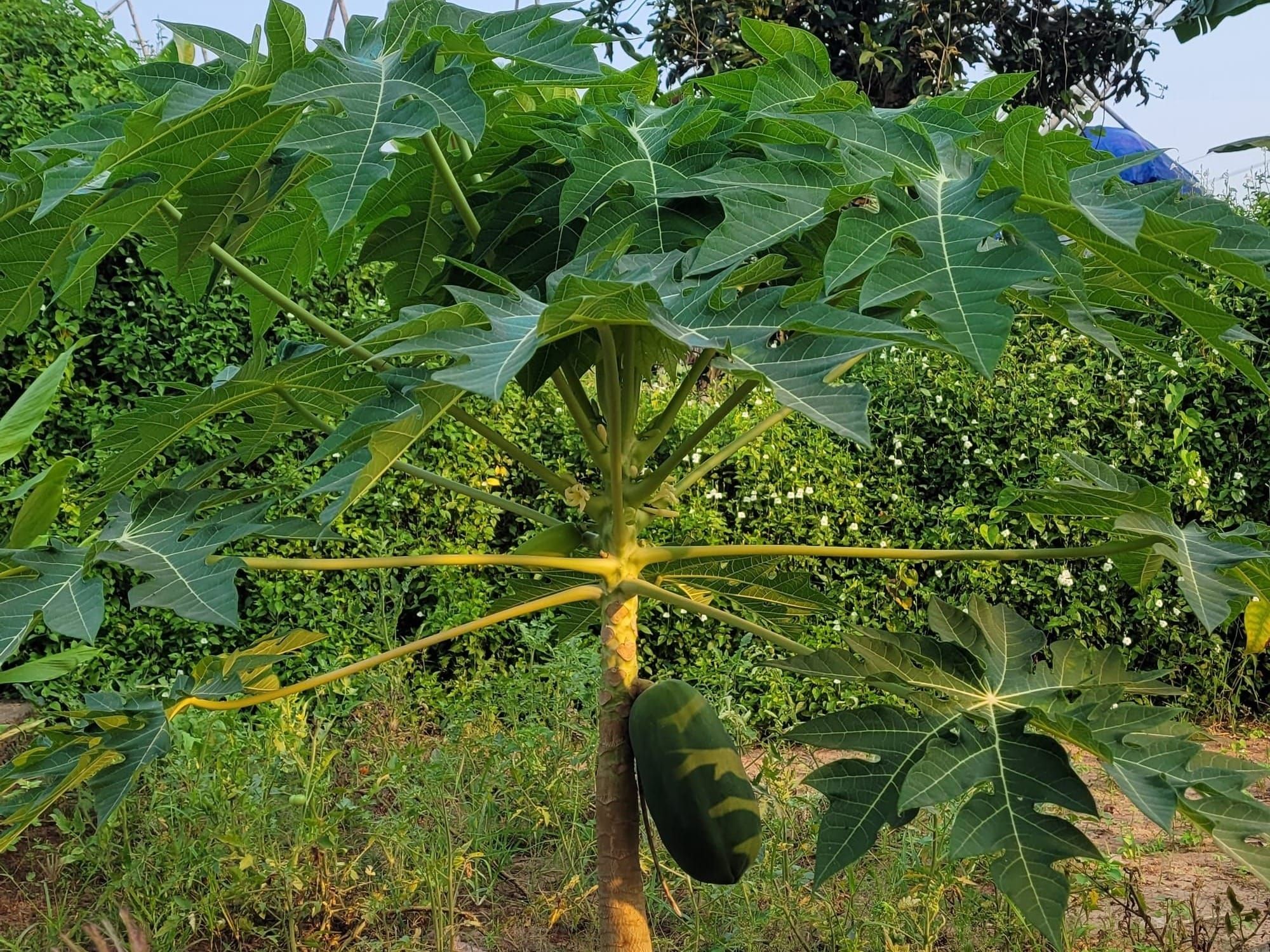
తీగకు కాయ బరువా? (theegaku kaya baruva?)
నాన్న (Nanna is father in Telugu) worked for the Government of Andhra Pradesh as a veterinary doctor. His work took us to the Block Development Officers Training Center in Bapatla. It is called AMR-Andhra Pradesh Academy of Rural Development Training Center now. The Development Officers Training Centers were established in April 1954 by the Government of India’s Ministry of Community Development, and Panchayat Raj Corporation to train Block Development Officers to oversee and manage Community Development Projects in India. It changed names a few times and was handed over to the state government by the Government of India in 1967. In 1970, the institute was renamed as "State Institute of Community Development and Panchayat Raj". నాన్న (Nanna) started working there in 1972 when it was still referred to as the Block Development Officers (BDO) Training Center. He oversaw their dairy and poultry farm operations and taught dairy and poultry farm management courses.
These centers trained officers in various aspects of rural development. They trained them in agriculture and poultry farm management. All employees lived and worked on this large campus built in the middle of a forested area. The campus had teaching facilities, agricultural fields, dairy and poultry farms, and living quarters for employees and trainees. This campus was very close to the intersection of Howrah–Chennai main line train tracks and the Guntur-Bapatla-Chirala Road.
The summer between my 6th and 7th grades, we moved from a smaller quarters to a larger house on the campus. We had a larger front yard and backyard extending all the way to the Howrah–Chennai main line train tracks. There was a handpump in the front yard. We didn’t use this much since we had running water in the house unlike our previous smaller quarters.
అమ్మ (Ammma is mother in Telugu) decided to grow vegetables in our backyard. She planted పొట్లకాయ (potlakaaya), దోసకాయ (dosakaya), దొండకాయ (dondakaya), వంకాయ (vankaya), and many other vegetables. We had a bumper crop of several vegetables and పొట్లకాయ (potlakaaya) surpassed all of them. అమ్మ (Ammma) sent us kids to distribute excess vegetables in our colony. We would walk around the colony from house to house with baskets full of vegetables. Our colony residents were very happy to get their hands on fresh and tender vegetables totally free.
కాయ (kaya) is Telugu word means a green vegetable or fruit. It is used as a suffix in vegetable and fruit names. మామిడి కాయ (mamidi kaya) is a green Mango, whereas మామిడి పండు (mamidi pandu) is a ripe Mango. కాయ (kaya) is a versatile word and if you remember the word కాయ (kaya), you can name several vegetables, fruits, some body parts, and actions with ease in Telugu. తలకాయ (talakaya) means head, బుర్ర కాయ (burrakaya) means head and brain. As for actions, knuckle nuggies are మొట్టికాయలు (mottikayalu) in Telugu. One could deliver మొట్టికాయలు (mottikayalu) to others on their తలకాయలు (talakayalu).
పొట్లకాయ (potlakaaya), దోసకాయ (dosakaya), and దొండకాయ (dondakaya) grow on తీగలు (theegalu are vines in Telugu). అమ్మ (Ammma) hired help to build పందిరి (pandiri) to grow them. పందిరి (pandiri) is a canopy built from bamboo poles as support for తీగలు (theegalu), a venue for weddings, funerals, or other events. When there was a wedding at our paternal grandparents’ place, one of the first tasks was building a పందిరి (pandiri) in the front yard to serve meals during lunch and dinner and then as place to hangout and chat. It was so much to run around under the పందిరి (pandiri) grabbing snacks or stopping to make paan using the ingredients sitting on a platter. Paan is a digestive aid made out of betel leaf (Piper betle) filled with chopped betel (areca) nut (Areca catechu) and slaked lime (chuna; calcium hydroxide).
Large green పొట్లకాయలు (potlakaayalu is plural) hung from the తీగలు (theegalu). They could be mistaken for snakes in the dark. పొట్లకాయ (potlakaaya) is Snake gourd. It can grow as long as six feet long. It is light green in color with white stripes that run from its top to the bottom. అమ్మ (Ammma) made delicious melt in the mouth పొట్లకాయ (potlakaaya) ఇగురు (eguru) that went very well with rice and daal. ఇగురు (eguru) is cooking technique which involves boiling until the moisture has evaporated. ఇగురు (eguru) dishes are made out of vegetables, fish, prawns, chicken, or goat meat. The summer went by very quickly as we all stayed busy growing vegetables, harvesting them, walking around the colony distributing them, wandering around the vines, playing hide and seek under them or just chilling reading a book sitting under their cool shade to escape the heat during the afternoons.
తీగకు కాయ బరువా (theegaku kaya baruva)? means “Does vine find its fruit heavy?”. This sameta reminds me of the summer of vegetable growing. Even though this sameta reminds me of a fun summer, it has a deeper meaning. I grew up hearing adults around me using this sameta to indicate that a parent will never think their children are a burden on them.
When I asked అమ్మ (Ammma) and నాన్న (Nanna) for something I considered an imposition, they would respond with “తీగకు కాయ బరువా (theegaku kaya baruva)?”. నాన్న (Nanna) carried me around as I hung onto him like a కాయ (kaya) hanging down from a తీగ (theega) with no care in the world about falling down. అమ్మ (Ammma) and నాన్న (Nanna) have been there for me all through my life being a support system during my childhood and beyond. They continue to provide moral and emotional support as needed throughout my adult life. నాన్న (Nanna), who is no longer with us, continues his work in my headspace whenever I am troubled by something. Now it is my turn to say తీగకు కాయ బరువా (theegaku kaya baruva)? to my children when they ask for help.