
Veranda Tales-How is that relevant?
రామాయణంలో పిడకల వేట - ప్రేమాయణంలో పడతుల వేట అన్నట్లు (raamaayanam lo pidakala veta - premaayanam lo padathula veta annattu) - On occasion I find myself thinking about something that comes to mind distracting me from the task at hand.
.jpg)
రామాయణంలో పిడకల వేట - ప్రేమాయణంలో పడతుల వేట అన్నట్లు (raamaayanam lo pidakala veta - premaayanam lo padathula veta annattu)
On occasion I find myself thinking about something that comes to mind distracting me from the task at hand. I would start thinking about if I turned the stove off or unplugged the iron I used before stepping out of the house. My wandering mind prevents me from enjoying conversation with friends and family while eating a delicious meal. Whenever I worry about things like this, the story of two women and “రామాయణంలో పిడకల వేట (raamaayanam lo pidakala veta) sameta comes to my mind.
Once upon a time, there lived two women, మల్లమ్మ (Mallamma) and రావమ్మ (Ravamma), who were neighbors and friends. They both lived in a small farming village lined with small cottages. మల్లమ్మ (Mallamma) and రావమ్మ (Ravamma) spent a lot of time together going to the market to get groceries, walking to the river to get water, washing their clothes, and other household chores. Once they got done with their household chores they would go to listen to stories from the epics, రామాయణం (Ramayana) and మహాభారతం (Mahabharata) at their village square or temple. It was common for village elders or temple priests to hold storytime for people in the village on temple grounds or under a large tree in a village square. These large trees were used for holding పంచాయతి (village court).
On a cloudy afternoon మల్లమ్మ (Mallamma) and రావమ్మ (Ravamma) went to listen to the story of రామాయణం (Ramayana). As they sat listening to the రామాయణం (Ramayana), it started to rain lightly. మల్లమ్మ (Mallamma) remembered that she left పిడకలు (pidakalu) out in the Sun for drying. మల్లమ్మ (Mallamma) said to రావమ్మ (Ravamma) that her పిడకలు (pidakalu) were still drying outside and that she was concerned they would get wet in the rain. రావమ్మ (Ravamma) assured మల్లమ్మ (Mallamma) that the rain would stop soon and went back to listening to the రామాయణం (Ramayana) recital. The rain picked up and మల్లమ్మ (Mallamma) kept talking about her పిడకలు (pidakalu) getting wet. She was concerned that it would be very hard to start a fire using the wet and soggy పిడకలు (pidakalu) to cook dinner. After a few of these interruptions రావమ్మ (Ravamma) said, “Let’s go and rescue your పిడకలు (pidakalu), I am tired of your రామాయణంలో పిడకల వేట (hunt for pidakalu in Ramayana)”.
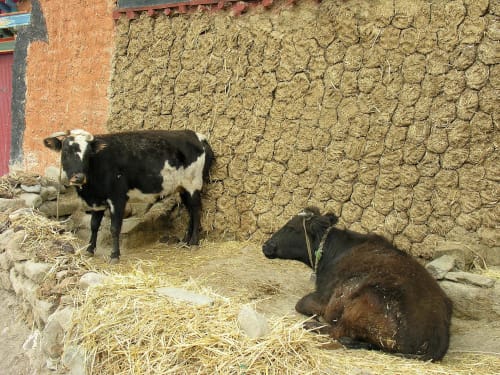
పిడకలు (pidakalu) are cow dung cakes used as fuel in villages in India. I grew up in villages watching women and men mix cow or buffalo dung with small pieces of dried hay and twigs to make round patties. Once the patties were made they would slap them against a wall for drying. Villagers use them as fuel for cooking. Cow dung patties are considered sacred and used in Hindu ceremonies as fuel to light fire.
.jpg?ref=shuahkhan.com)
The original form of this sameta was, “రామాయణంలో పీఠకాల వేట (Ramayanam lo peethakaala veta) which was used when buddhist monks were looking to find rules for righteous living in రామాయణం (Ramayana). Over a period of time the word “పీఠకాలు (peethakaalu)” became పిడకలు (pidakalu) giving us this funny story about a woman thinking about her పిడకలు (pidakalu) instead of focusing on listening to రామాయణం (Ramayana) with her friend.
The second part of this sameta. “ప్రేమాయణంలో పడతుల వేట అన్నట్లు (premaayanam lo padathula veta) is a humorous add on to the original. The “రామాయణంలో పిడకల వేట - ప్రేమాయణంలో పడతుల వేట అన్నట్లు (raamaayanam lo pidakala veta - premaayanam lo padathula veta annattu)” sameta meaning is “It is like hunting for pidakalu in Ramayanam - hunting or looking for women in an epic love story”. The wisdom in this sameta is that it is fruitful to focus on the task at hand of listening to the epic stories instead of letting your mind wander.
This sameta is used whenever someone starts talking about something tangential during a serious discussion. This sameta helps bring everybody back to the topic humorously without offending anybody. It is all too common during our family conversations about politics, philosophy, or mundane discussion about what’s for dinner for one of us to start talking about something that is totally disconnected. I am known to talk about and plan a next vacation instead of enjoying the one I am on. These are times I remind myself about this very relevant sameta to bring my focus back to the task at hand.