
Veranda Tales-Hedonic treadmill
తినగా తినగా గారెలు చేదు (thinaga thinaga gaarelu chedu) - The first spoonful of Ras malai or the first bite of బొబ్బట్లు (bobbatlu or Puran poli) tastes heavenly for people who love these two delicious sweets from India. Once a spoonful becomes a bowlful, it no longer tastes as good.
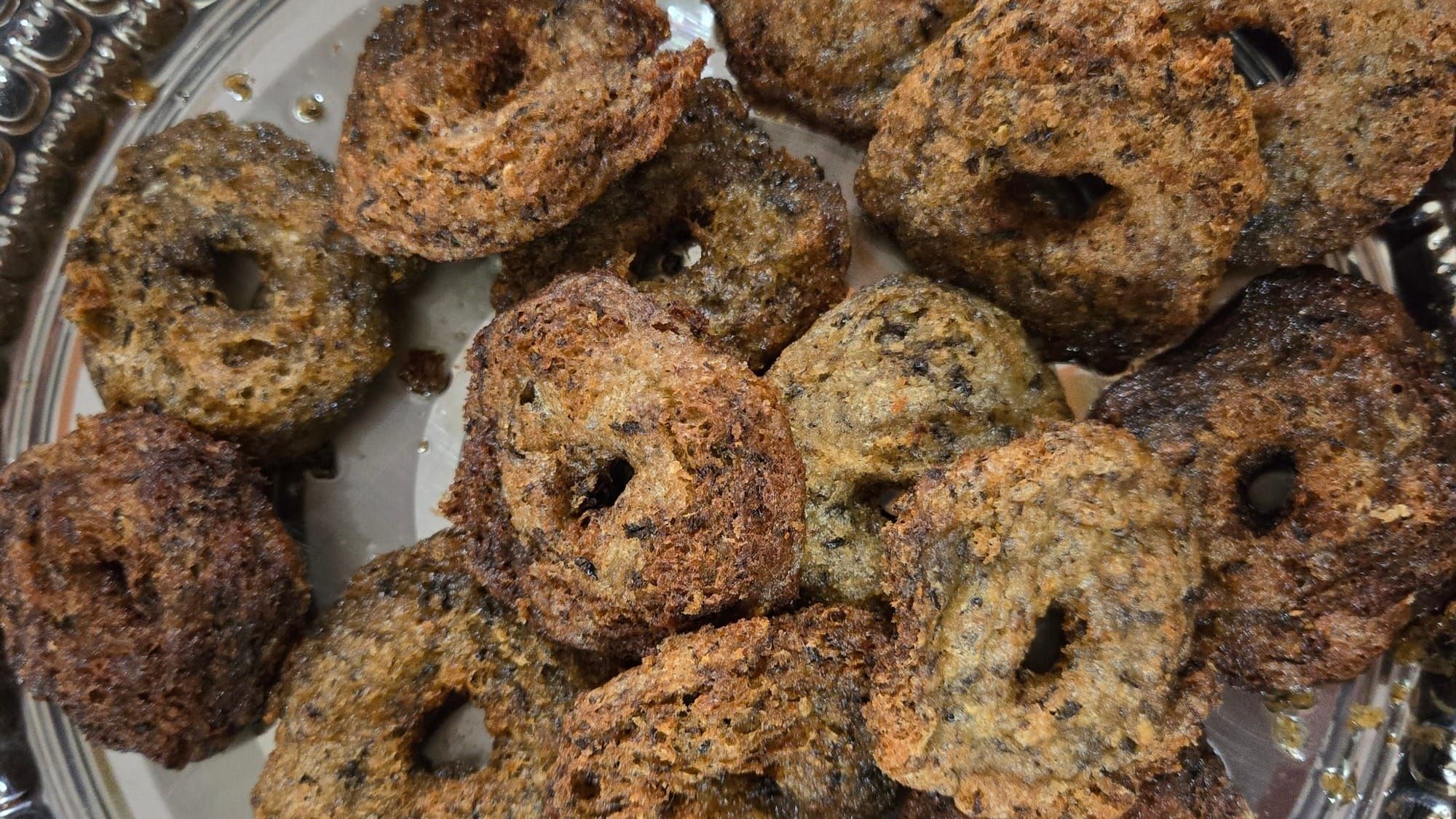
తినగా తినగా గారెలు చేదు (thinaga thinaga gaarelu chedu)
The first spoonful of Ras malai or the first bite of బొబ్బట్లు (bobbatlu or Puran poli) tastes heavenly for people who love these two delicious sweets from India. Once a spoonful becomes a bowlful, it no longer tastes as good. If you indulge in a handful of బొబ్బట్లు (bobbatlu) in one sitting, you probably don’t want to touch them for a while. We all have had the experience of reaching for the second and third serving of our favorite food only to be turned off by it.
This sameta conveys this experience saying, “if you eat a few too many గారెలు (gaarelu), they will start to taste bitter”. గారెలు (gaarelu) are deep fried donuts made out of మినప పప్పు (minapa pappu is black gram in Telugu). Black gram is soaked overnight and then washed to remove the skin before grinding it into a smooth paste with very little water. Once the మినప పప్పు (minapa pappu) batter is prepared with just the right amount of salt and spices, it is ready to be turned into గారెలు (gaarelu). అమ్మ (amma) would take a handful of batter in one palm and patting it with her other hand, would gently shape it into a small round and make a hole in the center. Then she would drop it into a బాండ్లి (baandli) full of hot oil and fry it to golden brown perfection. బాండ్లి (baandli) is a heavy cast iron pot shaped similar to a wok used for deep frying.
అమ్మ (amma) serves piping hot savory గారెలు (gaarelu) for breakfast, lunch, or dinner with కొబ్బరి పచ్చడి (kobbarii pachadi is coconut chutney in Telugu). తియ్య గారెలు (tiyya gaarelu means sweet gaarelu) are made by dropping them into light sugar syrup after deep frying them. They are soaked in the syrup for five to ten minutes before serving them. The తియ్య గారెలు (tiyya gaarelu batter is lightly salted without adding any savory spices. These are delicious and melt in the mouth. They are shaped like donuts and syrup oozes out as you take a bite. One difference is that these are full of plant protein. At least that is what I tell myself as I reach for my third or the fourth తియ్య గారె (tiyya gaare).
There is another savory and sour kind, పెరుగు గారెలు (perugu gaarelu) which are soaked in spiced పెరుగు (perugu is Indian curd or dahi in Telugu) mixed with water or spiced buttermilk. The spices are a mix of cayenne, ground cumin, and salt or green chillies, onions, and salt. Fresh spices are sizzled in oil and then added to the పెరుగు (perugu) or buttermilk. అమ్మ (amma) made పెరుగు గారెలు (perugu gaarelu) with పెరుగు (perugu) and fresh spices. She made the simple savory kind more often and తియ్య గారెలు (tiyya gaarelu) and పెరుగు (perugu) for special occasions and festivals. I like all three kinds of గారెలు (gaarelu) అమ్మ (amma) made. I didn’t consume enough of them in one sitting to find them to taste bitter.
This sameta conveys the meaning of how we can get bored with repeated activities in our day to day lives with a simple example of eating గారెలు (gaarelu) frequently. When I find a new restaurant, I would want to go there every other week until I find myself enjoying the food there less and less. I found coffee in Paris delicious and drank a few too many cups right before boarding a small plane. The whole time I was flying, I was nauseous as the flight was flying through clouds. The whole time, I was kicking myself for drinking several cups of coffee right before boarding the flight and consuming another during the flight. The excitement and rush of enjoying deliciously good coffee a little too much can turn sour very quickly. Since then, whenever I reach for that second cup of coffee before or during a flight, I check myself before it is too late.
The deeper meaning of this sameta is that we humans have a way of getting used to new and novel things and they become ordinary things. The initial excitement will settle into a routine and even be boring. When people move into a larger house, they are happy initially until they fill it up. The excitement of moving into a bigger space abates as time goes by and the space fills up.
Humans have an ability to quickly return to a stable state after positive and negative experiences. It can be observed in our everyday lives. If we get a raise or higher income, we adapt to a lifestyle that requires the extra money relatively quickly. It might be harder to adjust when our income goes down, but we humans can adapt to negative circumstances equally well. This adaptability is a strength in a lot of ways. The name for this adaptability is called a hedonic treadmill or hedonic adaptability.
There are several phrases that describe this phenomenon including the one we are currently talking about. We say “time is a healer”, to indicate that the intensity of negative emotions will subside with the passage of time. We say “honeymoon is over”, to indicate the high of positive emotions and novelty of new and exciting experiences wear off sooner or later. We also say, “there is sunshine after rain” to give ourselves hope that hardships won’t last long.
The sameta, “తినగా తినగా గారెలు చేదు (thinaga thinaga gaarelu chedu)” expresses this sentiment using an everyday activity of eating food. When I hear this samtea, I remember how delicious గారెలు (gaarelu) taste and then I can imagine how bitter they would taste if I had too many of them. This sameta reminds us of the importance of balance in life. This brings another sameta, “కలిమి లేములు కావడి కుండలు (kalimi lemulu kavadi kundalu) to my mind. This sameta means that wealth and poverty are like two కుండలు (kunda is a vessel or pitcher) hanging from a కావడి (carrying pole or milkmaid’s yoke) and best when they are balanced. Life is fulfilling when happiness and sadness are in balance.