
Veranda Tales-Don’t upset the applecart
పానకంలో పుడక (Paanakamlo pudaka) - We all know at least one person who loves to stick their nose where it doesn’t belong. They interfere in a situation or conversation that has nothing to do with them.
పానకంలో పుడక (Paanakamlo pudaka)
We all know at least one person who loves to stick their nose where it doesn’t belong. They interfere in a situation or conversation that has nothing to do with them. This very short సామెత (sameta) carries a deeper meaning to describe various scenarios ranging from interrupting a serious conversation between people to destroying plans and relationships by getting in the middle of them.
బెల్లం పానకం (Bellam Paanakam) is a delicious cooling drink made out of jaggery, water, black pepper and a small amount of ground green cardamom for flavor. Some people add lemon juice and ginger to give it a tangy and gingery taste. This drink is made as a cooling drink during summer in South India and especially made during Sri Rama Navami festival which is celebrated during summer time in April in Andhra Pradesh, a southern state on the east coast of India.
The state of Andhra Pradesh is blessed with fertile land and long coastal areas along Bay of Bengal. Two large rivers, Godavari and Krishna flow through the state to reach the Bay of Bengal. The Godavari river is the second largest and the Krishna river is the third largest in India, after the mighty Ganga river. Out of the four bridges that span the Godavari river in Rajamahendravaram, Godavari Bridge is the one I walked on soon after it was built with నాన్న (Nanna is father in Telugu). Godavari Bridge is a truss bridge with road surface on the top and railroad tracks below the road. Godavari arch bridge is a beautiful bowstring-girder bridge.
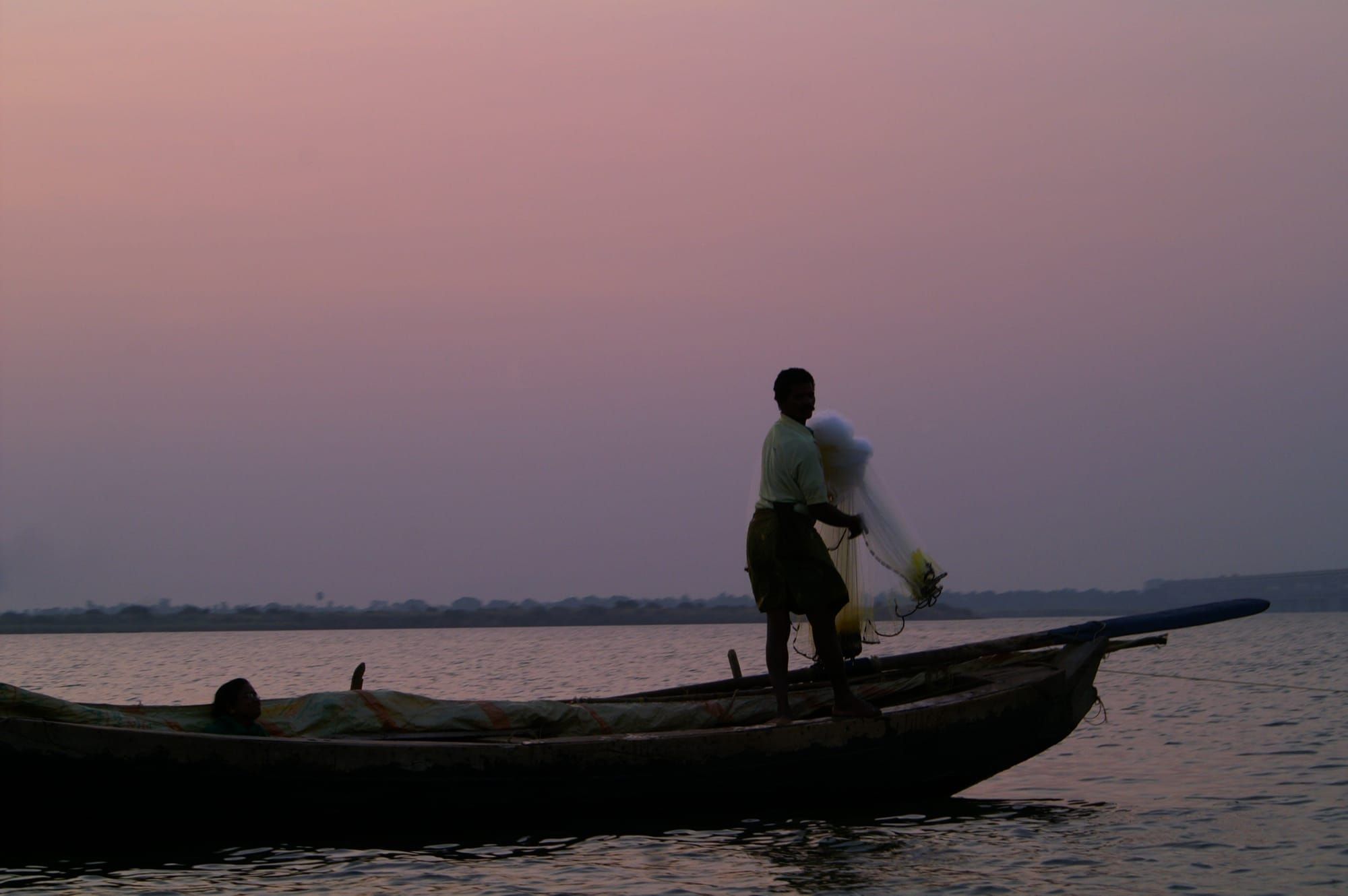
It is mesmerizing to watch fishermen cast their nets from their small boats as the Sun sets on Godavari river as Dhavaleswaram or Godavari barrage or any of the other bridges loom large in the background.
The Sri Rama Navami festival is celebrated to mark the birth of Rama to King Dasharatha and Queen Kausalya in the city of Ayodhya. అమ్మ (Amma is mother in Telugu) would make delicious బెల్లం పానకం (Bellam Paanakam) with generous amount of black pepper. I remember taking a large sip and feeling the pepper burn at the back of my mouth. Amma made a large amount of this drink since we all loved it. బెల్లం (Bellam) tends to have impurities such as small sticks or pieces of straw. పుడక (Pudaka) is a Telugu root word for a small stick or a stud. ముక్కు పుడక (Mukku is nose and pudaka is small stud in Telugu) is a small nose stud. పానకంలో పుడక (Paanakamulo pudaka) refers to these small stick or pieces of straw that interfere with the enjoyment of the drink. It can ruin the fun of drinking బెల్లం పానకం (Bellam Paanakam) all together. This is very similar to कबाब मे हड्डी (Kabab me haddi - bone in a kabab), a हिंदुस्तानी (Hindustani) proverb that conveys similar sentiment. Finding a piece of bone in a delicious kabab will be like finding sand in a delicious spoonful of New England Clam chowder.
అమ్మ (Amma is mother in Telugu) is a mighty queen of proverbs. When I interrupt a serious conversation between her and నాన్న (Nanna is father Telugu), she would retort, don’t get in the middle of our conversation like a పానకంలో పుడక (Paanakamlo pudaka). నానమ్మ (Nanamma is paternal grandmother in Telugu) was a mighty empress of witty retorts and comebacks. She would also say this sameta when she wanted us children to not be in the middle of conversations between adults. It didn’t really stop us though, especially when they were talking about us. Nanamma would still chase us away by saying, “If you don’t leave, I will send you back to our washerman's house where you came from”.
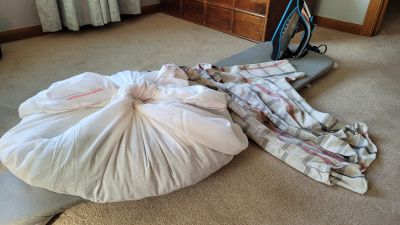
In our house, adults joked about how they found us in చాకలి (chakali is washerman or washerwoman in Telugu) మూట (moota is a bag of clothes in Telugu) brought back by our washerman. మూట (moota) is a specific term used when a large piece of clothing item such as a పంచ (pancha is a traditional garment worn by men in India) or చీర (cheera is sari or saree in Telugu) is used as a holder for all other smaller garments and opposite corners of this large garment knotted to hold them in place. This is how washermen and washerwoman carry dirty laundry from homes and bring back clean laundry. This expression “We found in a చాకలి మూట (chakali moota)” is similar to saying, a stork brought you home when you were a baby or stork brings babies. We then grudgingly left.
I have many memories associated with this sameta that packs a punch and is applicable to many situations. For example, when I made plans to go on an outing with my friends or get a picture taken at the studio, Amma would get me to take my little sibling along like a పానకంలో పుడక (Paanakamlo pudaka). I wasn’t happy about it for sure.
On a humorous note, I can't help but take a Sholay reference to say Jai acted like పానకంలో పుడక (Paanakamlo pudaka), when Veeru asked Jai to put in a good word with Basanthi’s मौसी (aunt in Hindi) and Jai talked about Veeru’s drinking habit and thereby sabotaging any chance of मौसी (aunt in Hindi) agreeing to Basanthi marrying Veeru. Sholay is one of the greatest and the most influential Indian movies of all time.
I had the good fortune of listening to the soundtrack for the first and second evening shows when it was playing in a theater a couple of blocks from where I lived. The first evening show started around 6 P.M and the second show ended around 12 AM. When I stepped out onto the veranda, I could hear Jai sarcastically asking Basanthi, “तुम्हारा नाम क्या है बसंती? (Tumhaara Naam Kya Hai Basanati? - What is your name Basanthi?)” and Gabbar Singh angrily asking his men, “कितने आदमी थे? (Kitne Aadmi the? - How many men were there?” after they came back defeated from their village looting expedition, over and over again for months on end. I watched the movie a few too many times in my life and will definitely watch it in the future. Sholay was one of the longest running movies in India. It was ranked first in the British Film Institute's 2002 poll of "Top 10 Indian Films'' of all time. I couldn’t agree more. If anybody disrupts my Sholay watching, I will chase them away calling them “పానకంలో పుడక (Paanakamlo pudaka).