
Veranda Tales-Creative fraud
తిన్నఇంటి వాసాలు లెక్కపెట్టడం - (Tinna enti vaasalu lekkapettadam)- In India, it was a common practice to give shelter to tired and weary travelers. Amma (అమ్మా is mother in Telugu) recounts her childhood and how travelers passing through would stop by her parent’s place to request food ...
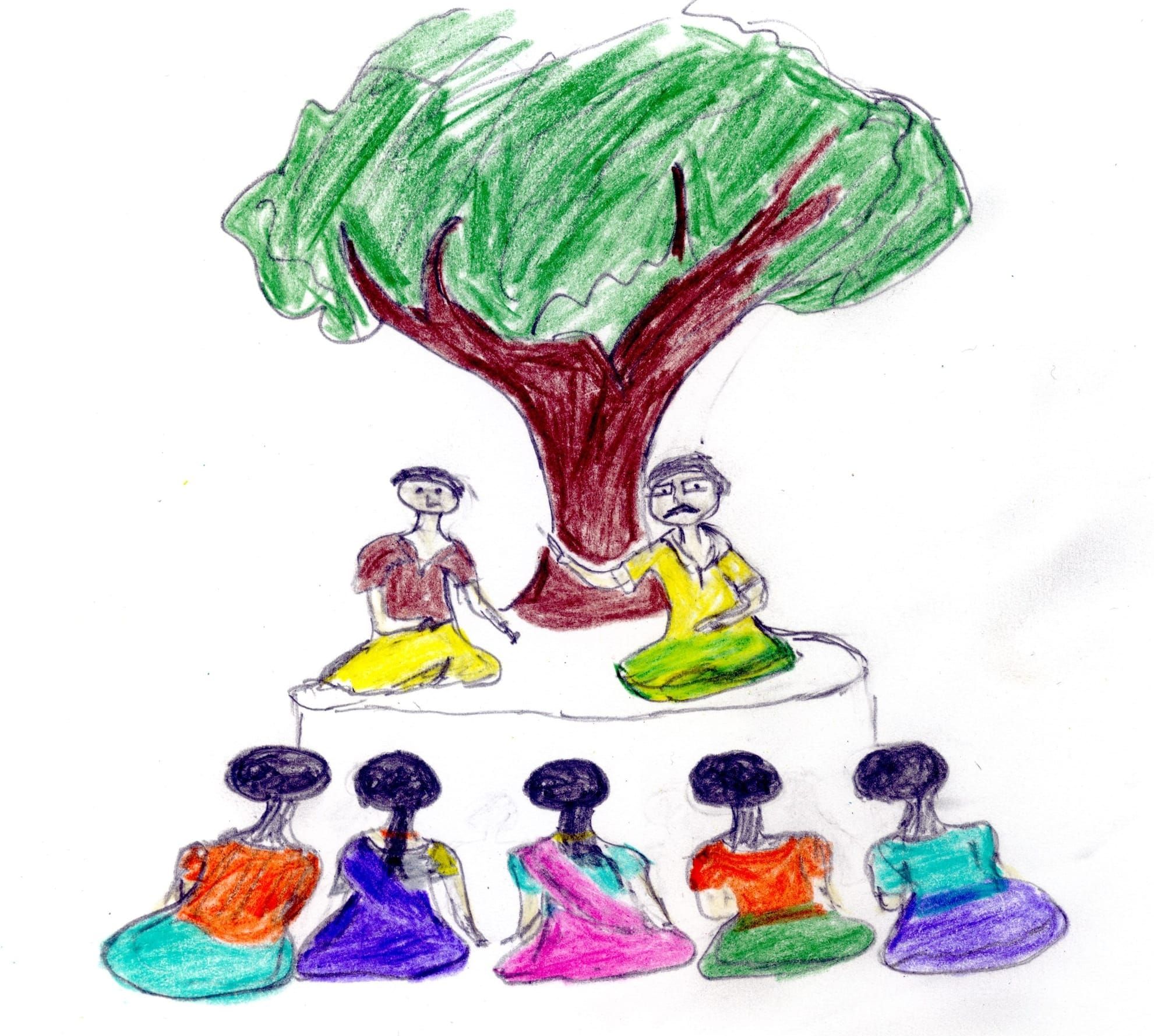
తిన్నఇంటి వాసాలు లెక్కపెట్టడం (Tinna enti vaasalu lekkapettadam)
In India, it was a common practice to give shelter to tired and weary travelers. Amma (అమ్మా is mother in Telugu) recounts her childhood and how travelers passing through would stop by her parent’s place to request food and shelter for the night. Amma grew up in a large house very close to a railway station on the Chennai-Howrah line. When I went to visit my grandparents, I could see the front veranda from the railway station. It was common for strangers to get off the train, walk in for a meal and stay for the night. Amma still tells stories about how her mother would cook extra food everyday for people that might stop by. One such visitor went on to become a famous movie actress, Waheeda Rehman.
The house was very large and built on higher ground with several steps leading down to the ground level. It was built to survive Godavari floods. The Godavari River was very close to their place. The ceiling had very large beams going across as a support and these beams are called వాసాలు (beams) in Telugu. I still remember water being carried on a కావడి (carrying pole or milkmaid’s yoke) from the river. The water used to be cloudy with red mud washed from nearby hills into the river when it was in flood. The water was then stored in large troughs and filtered for daily use. Whenever I hear the following story of a stranger, I remember my maternal grandparents' house.
As the story goes, a stranger came to Rammayya’s house asking for shelter for the night. Ramayya invited him in. Ramayya offered his guest meals and a room to sleep for the night. The guest enjoyed the meal and went to bed. The next morning, the guest went to గ్రామపంచాయత్ (Gram Panchayat or Village court) and told the judge that Ramayya’s house was his house and asked the judge to evict Ramayya. The guest told the judge that he had proof that the house was his. Ramayya was called into the court. The guest prompted the judge to ask Ramayya if he knew how many వాసాలు (beams or joists) the house has. When the Judge posed the question, Ramayya drew a blank. Then the guest told the judge how many వాసాలు (beams or joists), as he took the time to count them. The story ended with Ramayya losing his home. This story has become a cautionary tale to generous people that open their homes to strangers and also a tale of creative frauds that try to take advantage of good people.
It made me very sad that Ramayya lost his home. I created an alternate ending to the story that made me feel better. It was a small village. The judge must have known Ramayya and probably watched the house being built. So in my alternate ending; The judge says, “Very clever, but I know Ramayya owns the house and I helped him build it” and throws the case out.